Two Lives, One Postcode: A Working Framework for In-House Separation After an Affair

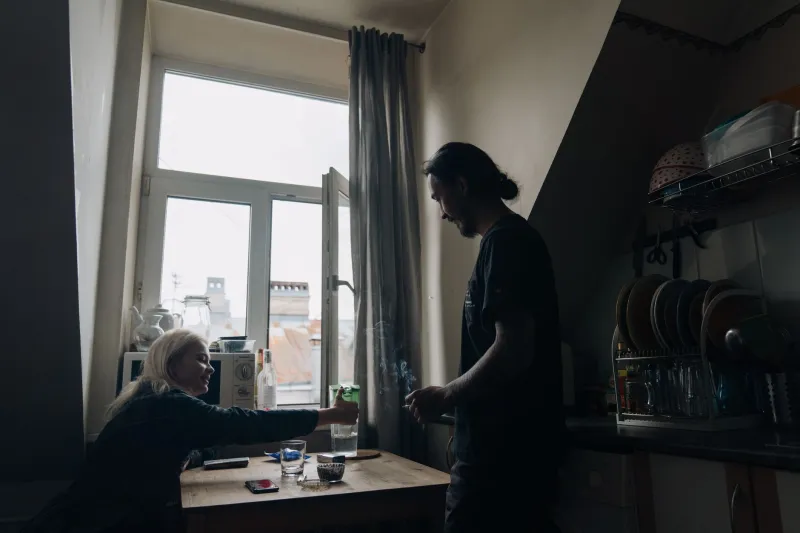
Photo: Elizabeth Ashley Jerman, CC BY 2.0, via Wikimedia Commons
An affair does not tidy itself away. It leaves a couple facing questions that are practical as well as emotional: who sleeps where, what the children are told, how the mortgage is paid, and whether either person should leave. For some UK couples, moving out is neither financially possible nor immediately wise. An in-house separation — living under the same roof while living apart as a couple — can offer a dignified middle path. It can also become an indefinite state of tension if it is not given shape.
The purpose of this guide is not to recommend separation or reconciliation. It is to describe how an in-house arrangement can be made workable, honest and time-limited, with the support of counselling and appropriate professional advice. The aim is not to make the home comfortable for avoidance. It is to create enough order for both people to think clearly about what comes next.
What an in-house separation is, and what it is not
An in-house separation is a deliberate arrangement in which two people remain at the same address while stepping back from the ordinary expectations of a shared couple life. It differs from a spare-room period of sulking or from a vague refusal to decide. It is not reconciliation, and it is not divorce. It is a structured pause with agreed terms.
The distinction matters. Without terms, the arrangement drifts into a form of limbo in which one person feels monitored and the other feels abandoned, while neither has the privacy or stability needed to recover. With terms, it becomes a period of honesty in which difficult decisions can be made without the pressure of immediate homelessness or financial crisis.
Start with a purpose and a review date
Before discussing bedrooms and bills, agree why the arrangement exists. Common reasons include protecting children during a school year, allowing time to sell a property, meeting the conditions of a tenancy, or giving both people access to counselling before a final decision. Write the purpose down in plain language.
Set a review date. Eight to twelve weeks is often realistic; six months may be appropriate where housing or legal processes are slow. The review is not a deadline for divorce. It is a date on which both people assess whether the arrangement is still serving its purpose or has become a way of avoiding the next conversation. Put the date in a shared calendar and treat it as a commitment.
Agree the practical grammar of the home
A written household agreement is not a legally binding contract, but it reduces ambiguity. It should cover sleeping arrangements, bathroom and kitchen use, laundry, cleaning, shared living space, noise, guests and overnight guests. If one person has begun a new relationship, both should agree what contact, if any, is appropriate in the family home and how it is handled discreetly.
Communication about logistics is often easier by message than by conversation, particularly in the early weeks. Keep messages short and factual: shopping, school pick-ups, repairs, appointments. Avoid using logistics as a route back into the affair argument. Courtesy matters: a brief acknowledgment in the hallway is not intimacy, but it is civilised. Privacy also needs explicit protection. Devices, post and personal belongings should not be searched. An in-house separation cannot function as surveillance.
Protect children from adult tension
Children notice atmosphere before they understand detail. They do not need a full account of the affair, but they do need reassurance that the adults are managing the situation. A joint, age-appropriate explanation is usually better than silence or contradiction: that the parents are having a difficult time, that they are working things out, and that the children are not to blame.
Agree that children will not carry messages between rooms. Keep routines as stable as possible: school, meals, bedtime, clubs, contact with grandparents. Arguments should not take place in front of them, and neither adult should seek comfort or information from them. If a child asks a direct question, a calm holding response is acceptable: that the adults are talking and will let them know what they need to know.
Manage money without secrecy
Shared housing usually means shared costs. Agree how the mortgage or rent, council tax, utilities, insurance and essential repairs will be paid. A fair split based on income is common, but it should be recorded. Separate current accounts are often sensible, with a joint household account for agreed bills. Keep receipts and statements for significant contributions.
Avoid major financial changes without advice: transferring savings, borrowing, changing a pension nomination or altering a will. These decisions may have legal consequences later. A solicitor can explain rights and obligations, and a family mediator can help where communication is difficult. MoneyHelper and Citizens Advice offer free guidance on debt and housing. If one person controls the other's access to money, that is a safeguarding issue, not merely a budgeting one.
Use counselling as the spine of the arrangement
An in-house separation places unusual strain on both people. Couples counselling can provide a contained space to discuss boundaries, disclosure and next steps without turning the kitchen into a courtroom. Individual counselling can help each person manage shame, anger or grief without relying on the other.
In the UK, look for a practitioner registered with BACP, UKCP or NCPS, or contact Relate for relationship counselling. Some employers offer an employee assistance programme; a GP can also signpost local services. If cost is a barrier, ask about low-cost clinics and charitable services. Counselling is not a substitute for legal advice, and a therapist should not be asked to arbitrate practical disputes. Its value lies in helping both people speak honestly and decide deliberately.
Intimacy, touch and the question of mixed signals
Physical closeness during an in-house separation can be confusing for both people. There is no obligation to maintain intimacy, and no rule that affection must stop. What matters is that any contact is freely chosen and not used to manage anxiety, secure reassurance or avoid a difficult conversation. If touch happens, it should be discussed afterwards rather than treated as a silent renegotiation of the separation.
Separate bedrooms are not a punishment. They are a practical boundary that gives each person privacy. If the arrangement is being used to punish or control, that needs to be named in counselling or with a trusted professional.
Legal advice and safety
An in-house separation does not change legal rights over the home, finances or children. A solicitor can explain the options, including the no-fault divorce process introduced in England and Wales in 2022. Family mediation can help with practical arrangements. Keep a record of agreements and review them when circumstances change.
Safety must come before structure. If there is domestic abuse, coercive control or a risk of violence, an in-house separation may not be safe. Refuge, Women's Aid and the Men's Advice Line offer confidential guidance. A safety plan may matter more than a household agreement.
Review, decide, and avoid permanent limbo
The measure of a successful in-house separation is not whether the couple stays together. It is whether the arrangement gives both people enough honesty, privacy and support to make a real decision. At the review date, ask three questions: Is the arrangement still necessary? Is it still safe and workable? What is the next step? The answers may lead to reconciliation, to mediation, to a planned separation or to a further fixed period. What they should not lead to is an indefinite drift in which nobody is leaving and nobody is repairing.
If you are considering an in-house separation after an affair, take advice early and put the agreement in writing. A discreet conversation with a counsellor or solicitor is not a declaration of war. It is a way of ensuring that the next chapter, whatever it holds, is entered with clarity rather than crisis.